Episode 48
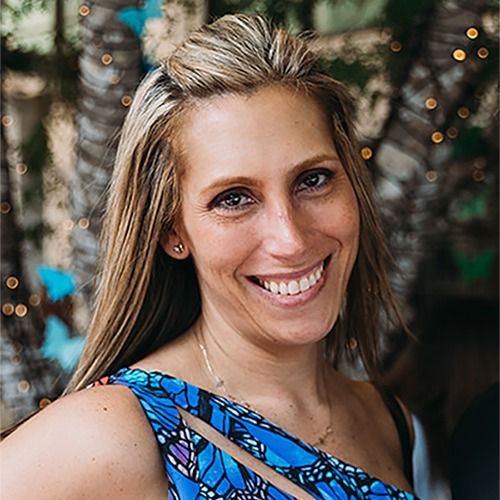
Episode 48: Untangling Complex Shame with Dr. Zoe Shaw
This is your go-to Podcast, where we help parents navigate the complexities of family life. Hosted by Ali Kessler of Greyson’s Choice, we’ll cover everything from understanding domestic violence to navigating the legal system, finding the right therapists, life hacks, family law, mental health, custody battles, and how to protect children in dangerous situations.
In this episode of Grey Minds Think Alike, Ali Kessler and Dr. Zoe Shaw delve into the complexities of shame, particularly how it affects women's relationships and self-perception. Dr. Shaw shares her personal journey with complex shame and offers insights into how it manifests in various aspects of life, including motherhood and friendships. The conversation emphasizes the importance of understanding the difference between guilt and shame, the impact of codependency, and the necessity of healing the relationship with oneself. Dr. Shaw advocates for intentional sisterhood to foster connection and healing, while also offering practical steps to help listeners untangle their own shame and guilt.
About Dr. Zoe Shaw
Dr. Zoe Shaw is a licensed psychotherapist, relationship expert, speaker, and the founder of drzoeshaw.com. She has dedicated her career to helping women heal from complex shame and understand how it impacts their relationships—with others and with themselves. Through her clinical work and teaching, Dr. Shaw helps women identify the hidden ways shame keeps them stuck in unhealthy patterns and empowers them with practical, compassionate tools to reclaim confidence, self-trust, and emotional freedom. She is the author of the upcoming book Stronger in the Difficult Places, which offers a transformative approach to healing complex shame through self-connection, intentional relationships, and sisterhood. Dr. Shaw’s work centers on the belief that healing does not happen in isolation—and that women grow stronger when they are seen, supported, and connected. You can find her on Instagram at @DrZoeShaw and in most social spaces at the same handle.
About Ali Kessler
Ali Kessler is a writer, marketing professional, passionate parent advocate, and founder of Greyson’s Choice, a 501(c)(3) created to raise awareness about the risk of domestic abuse on children. Greyson’s Choice was founded by Ali Kessler in memory of her sweet, vibrant, and fearless 4.5-year-old son, Greyson, who was murdered by his biological father in a murder-suicide during an unsupervised, court-approved visit in Ft. Lauderdale, FL, in 2021. This came just hours after her petition for a domestic violence injunction was denied by a Broward County judge, citing that the “petitioner has failed to allege any overt acts by the respondent which would constitute domestic violence under Florida Statute.” Ali’s advocacy efforts culminated in the successful passage of Greyson’s Law during the 2023 legislative session. This bill now requires the court to consider threats against ex-partners or spouses when making child visitation and custody determinations in the court, expanding to include the following factors: evidence of domestic violence, whether a parent in the past or currently has reasonable cause to believe that they or a minor child is, or has been in imminent danger of becoming the victim of domestic/sexual violence by the other parent, even if no other legal action has been brought or is currently pending in court.
Contact Ali:
Transcript
Dr. Zoe Shaw Podcast
Ali Kessler: [:My guest today is Dr. Zoe Shaw, a licensed psychotherapist and relationship expert. Dr. Shaw has dedicated her career to helping women untangle the deep-rooted shame that keeps them stuck in painful patterns. She is the author of the upcoming book, Stronger in the Difficult Places, which offers a compassionate, practical roadmap for healing complex shame, rebuilding self-trust, and reclaiming confidence through intentional relationships and sisterhood.
o welcome, Zoe. Thank you so [:Thank you. What a wonderful introduction. Well, if you can just give our listeners a little brief background on how you got started into relationships specifically.
Dr. Zoe Shaw: Yeah. Well, I'll talk about my development of complex shame. Now, I'm a licensed psychotherapist, I'm an author, I'm a speaker, I'm a mom of five amazing kiddos, and I live in- That's commitment right there.
Yeah, yeah. And I live in Southern California. But go all the way back to where some of my complex shame, first developed. I was a Black girl who grew up in a all-white farming community in rural Maryland, and I developed a lot of racial identity shame through that experience. And when I was 15, I got pregnant, and I also grew up in a fundamental Christian home.
spital in Virginia- Okay ... [:I came back home, left my daughter in the hospital, and came back home to pretend like nothing had ever happened, and that was kind of the genesis of my complex shame. And that's a, you know, not a, a common story. Right. And so obviously that's not the only way that complex shame gets developed, Right
but that's how, how mine started. And so I really dealt with my trauma and my grief by doubling down on accomplishments. I did extremely well in school. I did extremely well athletically, got a scholarship to UCLA, which brought me all the way here to California.
Ali Kessler: Right.
Dr. Zoe Shaw: You know, competed at a very high level and doubled down and got my bachelor's, got my master's degree in psychology and my doctorate.
p in codependency, in a very [:I gave birth to my first kept daughter. She was born with a rare genetic disorder. And in the NICU, when we didn't really know if she was going to live or, or die I really attached to the story of placing my first daughter for adoption and felt like I was being punished, and that's when I really went into a shame spiral.
So fast-forward, I figured out what was going on with me. I figured out what was going on with a lot of my clients, and I called it complex shame. Okay. And it's different. What is... Yeah. And, yeah. If you could
Ali Kessler: just give us a little definition of what complex means.
Dr. Zoe Shaw: Absolutely. And so that's how I came to helping other women and men, really untangle complex shame for themselves.
And so complex shame is different than simple shame. But before we can really talk about shame, we need to talk about guilt- Okay ... because a lot of people don't really understand the difference, even though Brené Brown has done a really great job of explaining it. Guilt is a very healthy emotion when it's valid.
nge behavior. Okay. So guilt [:Maybe that works, maybe it doesn't sometimes, but what I'm also gonna do is say, "I'm not going to do that anymore." So guilt changes- Right ... behavior in a healthy way. Okay. Shame is a physiological emotion- end message that says, "I am wrong." Right. And if you are wrong, there is nothing to do but hide. And so shame is unhealthy in all the ways it sh- shows up because shame makes us hide.
And when we hide- Right ... we distance ourselves from ourselves, from relationships. And so a lot of people misunderstand that. Right. Now, the cool thing about shame is that when you talk about it and someone else gives you compassion, someone else says, "Me too," someone else says, "I get it," your shame- Right
will literally melt away.
Ali Kessler: Right. Unless- And I feel like the more you talk about it, like it's not shameful anymore, right? Exactly. 'Cause it's normal, or it can be. Exactly.
your- Right ... shame melts [:And so here are the reasons why. Okay. The first, number one, complex shame does develop a little more complexly than regular shame. Okay. You have a lot of shame attached to it. It's kind of like this snowball rolling down the hill, right? And it just c- gathers more and more and more shame, so it's very layered.
But what happens with complex shame is that when you do that thing of being vulnerable, and I tell somebody, if they give me that compassion, there's a part of me that says, "But you don't really understand. If you knew all the things, which you can't possibly know all the things, you would not give me that compassion."
And so our shame- Right ... stays and goes deeper. The other way that complex shame stays essentially is that someone may be vulnerable, and then they're gaslit for their shame. Right. This happens a lot in marginalized communities. Someone will say, "Oh, you're overreacting. That didn't really happen." You know- Right
deeper. Right. So that's the [:Ali Kessler: Well, I think a lot of our listeners who are going through maybe, a divorce or- Yeah ... you know, it, stuck in a relationship probably experienced that more than not.
So I guess, how does the shame keep them stuck in these difficult relationships, like even when they know something isn't right?
Dr. Zoe Shaw: Yeah. So you know what I didn't exper- e- explain is my whole experience of being in a dysfunctional marriage for 28 years and finally getting out. I experienced, number one, a lot of codependency which kept me stuck, and shame in the relationship.
And then there's shame involved in either staying in an unhealthy relationship or getting out of an unhealthy relationship. Right. Both things create shame. And what was your question? I've lost your question. Just,
Ali Kessler: I was just saying like, you know- What keeps you stuck ... when they're stuck in the relationships, yeah, like even when they know something, is wrong.
led space internally, right? [:Okay. And you feel like you are only worth something to people if you can do something or give them something or create an experience for them, an emotional experience. Right. That's codependency, right? Right. And a lot of people think codependency is weak, but codependency is actually a desire and need to control.
I wanna control your emotions so that I feel better, right? And so people get stuck in these codependent relationships, and the really sad thing that happens in shame-based relationships is that you're showing up in a relationship, and when someone loves you, which sometimes is happening, someone can truly be loving you, but because if you remember, what shame makes us do is hide, right?
nk- Right ... consciously or [:And that can both keep us in unhealthy relationships, and that can get us into those unhealthy relationships. Right.
Ali Kessler: Well, what are some of the earliest signs that, I guess, shame and not just weakness, you know, is driving someone's decision?
Dr. Zoe Shaw: Hmm, shame and not weakness? You know, I, I would say that most people's decision are, are, decisions are driven by strength.
The problem is that- Or fear ... well, but it's still attached to strength, right? The problem, and so let's talk about that for a minute because I believe strongly that all behavior makes sense in its context. And so if you think of, for instance, a, a soldier on the battlefield. Think of- Right ... all the armor that he needs, the guns, the grenades, the armor, all this stuff, right?
strength, right? He uses it [:He's gonna get arrested. It's just not going to work, right? Right. Yep. And we do that. We do that. We carry all of that armor that was really strong that we built to protect ourselves in our childhood, and we bring it into our relationships. Right. And so it can seem like weakness, but it's actually strength that's no longer needed.
Right. And we overwork, and we hustle, and yeah, it's fear- Yeah ... because I have to protect myself. Right. And the person listening who feels very weak can recognize that your choices, your choice to stay, your choice to choose that person, all of the ways that you respond in court to your attorney, to, you know, the co-parent- Right
fe. And so when we can start [:And if the answer is no, then it's time to start looking at, how can I change it, and what would keep me safe
Ali Kessler: now? I know, like, for me personally, when I was in my relationship with, my son's father,. well, not, we were not in a relationship. We had a child together, and he chose not to be a part of his life until he was six months old.
And the four years that he was here, it was very tumultuous, and he was narcissistic, and he used coercive control. So ultimately, I had to just ignore a lot of text messages or messages that I would get just to sort of, like you said, to sort of cope with that in my life and my life with my son as my response.
that relationship, it helped [:They just won't. So it's, it's hard when... and I know a lot of other parents going through, like, in family court, they need help, and they can't get it. Yep. So they're often dealing with a lot of emotions and feelings and, and behavior with saying, like, "I don't know what else to do."
Dr. Zoe Shaw: Right. Yeah, you know, your not responding to him was a healthy boundary.
the communication that does [:Right. And so- Yeah, absolutely. Your w- It's taxing It's taxing Which does tire you. And if we think of, like, a body's immune system, there's only, you know, when we keep attacking it with viruses, it does tend to get weaker, right? It feels weaker. Yeah. And, and so what we have to do in those situations is we have to, number one, know this energy coming to me has the potential to make me see myself differently, to even make me see myself through their eyes, right?
d how can I put up a healthy [:Right. Because when we have abuse, emotional abuse, verbal abuse, without intention, we are going to be a sponge and take it in. Right. And we've gotta learn how to create this healthy wall that's not taking in all of the verbal abuse.
Ali Kessler: Right. Now, piggybacking off that, you talk a lot about healing the relationship with yourself.
Right. What does that actually mean, and where does
Dr. Zoe Shaw: one begin? Yeah, that's a great question. You know, it all starts, it all starts with you. It does. Your choices, you being able to take accountability, not for any abuse that happened to you, but how you show up and how you continue to show up, right? And it's about, it's about creating that radical accountability, but also really getting to know yourself.
spond and trying to protect, [:And our relationship with ourself is the most important because it determines all of the re- relationships that we will have. It determines what we accept. It determines how we show up. And so what I mean by that is learning how to date yourself. What I mean by that is asking yourself the kinds of questions you would ask somebody that you really wanna get to know.
And not just stopping with the surface answers, right?
Ali Kessler: Right.
Dr. Zoe Shaw: You know, in my next book that I'm talking, that I'm writing called Get Over Your Mother, I ask a very simple question, which is, what's your favorite color and why? Right? I can tell you my favorite color is blue, and it's because it was my mother's favorite color, and that influenced it being mine.
uestion, is that my favorite [:Right. Did I just want to be like her? And it's- It could be a little
Ali Kessler: of both.
Dr. Zoe Shaw: It could, it could. But the question is, let's start asking ourselves questions about ourselves and our behavior. Right. Because here's the thing, I think I said earlier, all behavior makes sense in its context. Yes. And that means all the behavior you've chosen- Right
the people you chose to date, the people you chose to marry- Yeah ... the work you do- It's for a reason ... it's for a reason. And so understand that context. Right. What's your context?
Ali Kessler: Right. Well, my favorite color is Grey because life isn't black or white, it's Grey.
Dr. Zoe Shaw: So- When did that happen? When did your favorite color develop?
r some ridiculous reality TV [:And I was like, oh my God, that's it right there. And ironically, my first job after college was at Grey Advertising in New York City.
Dr. Zoe Shaw: Wow.
Ali Kessler: Very- So I feel like this name has been- Totes yeah ... with me forever. Yeah. And now since Greyson passed, I see the word Grey everywhere, like, in any kind of context. I was just in Hawaii, and our hotel was at its own private beach, and it was called Grey's Beach.
Okay, weird. I turned on the TV in our hotel room, and it said Grey Information TV, something, whatever. I was like, okay, this is weird. He is with me everywhere. So now that we just, totally got off topic here, yeah, Grey. That's okay. How did you spell his name? E-Y. G-R-E-Y- E-Y ... S-O-N. Yeah. Yeah. And how old is he? So that's where
me show up in, like, sort of [:Dr. Zoe Shaw: Mm-hmm. Yeah. I love that you talk about motherhood, 'cause like I said, my next book is about, it's called Get Over Your Mother.
You know, there's two ways that I want you to think about shame showing up. The first is wherever in the world you wanna hide, whenever you think, "I don't want them to know that," or "Oh, I, you know, I need to not let them know that," that's where your shame is. That's exactly where your shame is. So that's how you identify it.
And then what shame makes us do is hide, and part of the way that we hide is we agree. So we agree to things that we really don't want to. We agree to things to keep the peace. We agree to things to keep a friendship, and we agree to things- Right ... to, keep the love of our mother.
Ali Kessler: Yeah.
Dr. Zoe Shaw: And so that's how shame can show up in our relationships- Right
is through hiding and agreement when you know your soul really doesn't agree to whatever- Right ... the thing is. Yeah. All right.
cular, I have a lot of guilt [:Even though I'm trying to just get through the day in, you know, my busy, hectic world, and it's just sort of hard to... ' Cause I have so much to do, but I have a lot of guilt. So how does one, I guess, you make
Dr. Zoe Shaw: peace with it? Question is, where does it come from? Where did you-- where were you taught that you should be doing something other than what you're doing right now?
Probably from her. Yeah. Probably, they
Ali Kessler: call
Dr. Zoe Shaw: it Jewish
Ali Kessler: guilt, where they're saying "Why are," you know, "why are you not doing more? Why are you not bringing me dinner? Why are you not stopping by? Why are you not spending more time with me?" And you know, part of it is true. She's getting older, and she's not gonna be here much longer, so I do want to spend more time, but then I just often just get busy and wrapped up, and then I-- it turns into guilt.
Right. And
To spend more time with her, [:Ali Kessler: the action. Or to want to.
Dr. Zoe Shaw: What's the message? The message is- I'm not sure ... I'm a bad
Ali Kessler: daughter? I don't necessarily think I'm a bad daughter. I think it's pretty normal to just be busy. It's just my message is, is just, yeah, I don't know.
It's just I feel bad. I feel s- I feel bad for her 'cause she's
Dr. Zoe Shaw: alone. Okay. So it's your responsibility then to- Yes ... take care of your mother and make sure she's not alone.
Ali Kessler: I know if it were me and I was, you know, living alone and elderly, I would want someone to... Bye.
Dr. Zoe Shaw: So there's an empathy, and then you're feeling like you're not acting on your empathy, and so you feel guilt.
Yeah.
Ali Kessler: But I think I'd say probably a lot of people feel that same guilt with their parents in some fashion, you know, especially- I think
Dr. Zoe Shaw: it depends. Yeah, I think it depends on the messages that our parents sent to us about what our responsibilities were, right? Some families are very clear, like, "I am your responsibility when you're an adult, and-" Right
to ask ourselves is, "Have I [:Right. And so you wanna ask yourself that too. So if your answer is, "Yes, I broke my moral code," then you wanna say, "Is this a moral code I wanna continue to uphold for myself?" Okay. Right? And then if the answer is yes, then then change needs to happen. Right. So you need to do something. You need to take action.
If the answer is, "No, I haven't broken my moral code, but I still feel guilty, I still feel terrible because they think I did something bad-" Right ... or, you know, for some other reason that's been conditioned, then the answer is, "I need to give that back to whoever gave it to me." Right? And then that's the work to do is how do I give this back?
If I haven't broken my moral code, it's not valid guilt. How do I take this feeling and give it back to them? Right. Well, yeah, that, that
Ali Kessler: would be nice.
Dr. Zoe Shaw: That'd be nice if I could do that, but yeah. If you could figure out how to take it and give it back.
mean, look, she's, you know, [:She just had a cancer scare. She fell yesterday, so there's a lot she goes through. You know, as her child, I think it is part of my duty to make sure that my mother is cared for-
Dr. Zoe Shaw: Right ... just
Ali Kessler: like she
Dr. Zoe Shaw: would for her daughter. And so then part of what you feel is valid guilt. Yes. But do you have to do it all, or do you need to make sure that it's done?
I mean, sadly, I have two other sisters, and everything is left to me. So then it's about boundaries because part of the guilt we have is this, this idea and this message that I have to carry it all, right?
Ali Kessler: Yeah.
Dr. Zoe Shaw: And sometimes, especially in families, if we wanna talk about shame and family dynamics, is that- Oh, goodness
people in families tend to play very clear roles, and it sounds like you've been given the role of, "She'll do it," right?
Ali Kessler: Well, I don't speak to my other two sisters, so yeah. One lives in California, and she's just not here. She's not- And the other one just has no responsibility whatsoever, so.
Dr. Zoe Shaw: So you've still been given that role.
role. You've been given the [:Ali Kessler: Stronger in the Difficult Places?
Dr. Zoe Shaw: Mm-hmm.
Ali Kessler: Correct? Okay. Yeah. So this grew out of your work.
And what inspired you to write it?
Dr. Zoe Shaw: Yeah, the story about my life that I just told you inspired me to write it, and how I came to understand what complex shame is and how it shows up in a person's life. And my goal is, what I've been doing for a while now, is helping people untangle that complex shame and get over it.
Okay. And so that's, that's what inspired me to write the book, and the book explains complex shame, Okay ... through the story of my life. Yeah. Okay. So
Ali Kessler: what are some practical everyday steps that you can tell our listeners right now to maybe just sort of start untangling the shame in their lives?
What is one thing that they could do today?
Dr. Zoe Shaw: Right. Well, the first thing they can do is ask themselves, "Where am I hiding?" That's how they figure out where the shame is, like I said before. So if you figure that out, then you've gotta start asking yourself questions about that shame. So where did it come from?
hat are being said to me? So [:But what we actually do is we pack up all the words that were said to us, and now we, we start to own them. Right. We take them on, and we say them to ourselves. And so you've gotta start to become aware, what are those words that I'm saying to myself?
Ali Kessler: Right.
Dr. Zoe Shaw: And are they true? Now, the thing with shame is that because you feel unworthy, you feel like you are blamed for something.
You carry the blame. And when something happens to you, and you may even be victimized, there's still a part of you that feels blame, right? And so what we also have to do is start to untangle that blame, and the way that we do that is you need to identify, what do I blame myself for? Right. What should I have done?
one? What's mine? What's not [:Right. And so what you have to do is ask yourself, "What do I blame myself for? Maybe I should've fought back. Maybe I shouldn't have fought back." We blame ourselves for both, and when you can actually take accountability, okay, I made that choice in that moment. I made it for a good reason. We understand, 'cause all behavior makes sense.
How can I forgive myself for that? So one of the things that, and I know people are like, "Well, how do I forgive," right?
Ali Kessler: Right.
Dr. Zoe Shaw: The quote that I love about forgiveness is a Lily Tomlin quote, and that is that forgiveness is giving up all hope of a better past. That's the first step, is being able to give up the fact that the past could have been any different.
e done wrong. That's not the [:It can't be different. Right. And so if you can start to come to a place of I give up all hope of a better past, then you're moving towards acceptance, right? Right. And if you can move towards ac- acceptance, then you can move towards that forgiveness to eventually get to a point where you can be vulnerable now, because remember, if you are vulnerable with your shame, it dissipates.
If you have complex shame and you've kind of untangled it, you've forgiven yourself- Right ... you can be vulnerable, and if someone gaslights you, I don't care, 'cause I already know. Right. I'm already forgiven, right? Right. And if someone forgives me, gives me compassion, that's great. It feels good because I've already given myself that compassion.
d then I think about all the [:Yeah. And, you know, obviously it ended the way it ended- I definitely hold guilt. Now, I don't think that I ha- played a part in my son's death, but, you know, there's things that a mother will always just wish they did different and, you know, in hopes of a different outcome, and that's just something that I have to make peace with.
Dr. Zoe Shaw: Well, it's part of grief. It's part of grief. You know, the bargaining stage is going back and saying, "I wish I could've changed the past." Right. "I wish I could change the past." I don't know how often you've thought, "Okay, I made this decision to tell this man, and this led to my son's death. How can I take accountability for that and forgive myself for that decision?"
It almost seems unfair because we already know the logical answer. Right. You couldn't have known. That wasn't your fault. But if we do that thing that seems illogical and take accountability for that decision, understand why you made the decision and forgive yourself for it, and do that with all the little ones- Right
tarting to get on your path. [:Ali Kessler: Yeah. That's very true. Very true. So okay, let's talk about, you emphasize intentional sisterhood. Why is connection with other women such a powerful tool for healing?
Dr. Zoe Shaw: It goes back to external compassion. Okay. You know, we humans are not made to be alone, to live life alone.
We are communal people. We just are. Cats are not. They do great- ... you know, being all by themselves. Dogs don't. Dogs will die if you just leave them in isolation. Cats will be fine. Right. And so we have to understand that we are biologically wired to be in connection. Um, and when we are able to be real and vulnerable in connection with other people, and that's what I talk about sisterhood- Right
that is when we can experience true freedom and, and, and living shame-free. And so we do have to be intentional, way more than in the past because- Right ... you know, p- people are forming friendships way less than they used to. People- Yeah ... are, are not connecting in the way that we used to, and so- Yeah ... it's not going to just happen.
meet people. It's more- It's [:Ali Kessler: Right. How would, how would one, what's a good way to meet other women?
Would you say, like, groups or, you know, different online or activities, or what would you say?
Dr. Zoe Shaw: Yeah. So I love groups. I love activities, things that you enjoy doing, finding groups that are doing the same thing, whether it's a cycle club or, you know, an art club or a book club, whatever you're into. Obviously, there's, there's church and, and, and things like that.
There are some wonderful ways to meet people online. I have- Okay Prescribe to my clients, there's I think Bumble Friends. Right. Okay. Go on and you can find there are apps for finding friendships. Huh. That is super intentional, and it seems counterintuitive when we talk about the fact that screens- Right.
e it to develop a- Right ... [:Ali Kessler: Yeah. Yeah, that's interesting, 'cause when I lived in New York City, I used dating apps all the time.
It's the- Right ... only way to meet people. In such a big city with people everywhere- Yeah ... you can't meet people.
Dr. Zoe Shaw: You can't. So it's very- It's hard ...
Ali Kessler: very interesting.
Dr. Zoe Shaw: So how can people get your book? Yeah, you can get my book, Stronger in the Difficult Places, anywhere books are sold, Amazon, Barnes & Noble, anywhere they're sold.
until next year, so- Okay ...:Ali Kessler: Yeah.
can find that information on [:Ali Kessler: Okay. Well, that sounds fantastic. And, you know, I will definitely follow up, um, you know, about your next book, but thank you so much for, you know, the depth and the compassion and clarity you bring to such an important conversation.
You know, every woman experiences some sort of shame or guilt, so, you know, I hope this resonated with the audience in a way that's helpful. And I'll put all of your contact info in the notes. All right. So real quick, though, aside from you practice in California, do you do virtual? Can people- I do ... reach out to you?
Okay. Yeah.
Dr. Zoe Shaw: So I do practice in California. Outside of California, I work as a relationship coach, and I see people all over- Gotcha ... the world. Okay, perfect. So anyone
Ali Kessler: can reach out to you a- and go from there. Absolutely, yes. All right. Well, I may be one of your newest clients. Awesome. All right. Thank you. Well, thank you so much.
I really enjoyed this conversation, and we'll chat again. Thank you, Ali. I love what you're doing. Thank you. I appreciate it.